

Enterprise customers are increasingly refusing to sign contracts with startups that lack ISO 27001 certification. If your sales pipeline includes Fortune 500 companies or regulated industries, you’ve likely encountered security questionnaires that stall deals for months—or kill them entirely. This guide provides a complete roadmap for startup founders navigating the ISO 27001 certification process without dedicated security teams.
This content covers everything seed-to-Series B startup CEOs and CTOs need to understand about achieving ISO 27001 certification: from initial scoping decisions through successful certification audits. We focus specifically on resource-constrained startups where the CTO often doubles as the security lead. Topics like post-certification maintenance and advanced security architecture fall outside this guide’s scope.
Direct answer: ISO 27001 certification typically takes 6-12 months and costs $40,000-$80,000 for startups, but routinely unlocks enterprise contracts worth millions in annual recurring revenue—making the investment one of the highest-ROI decisions early-stage companies can make.
By the end of this guide, you’ll understand:
- Exactly what ISO 27001 certification requires from small businesses
- Realistic timeline expectations based on your startup stage
- Complete cost breakdown including hidden expenses
- Step-by-step implementation roadmap designed for lean teams
- How to calculate ROI and justify certification to your board
Understanding ISO 27001 Certification
ISO 27001 is the globally recognized security framework that establishes requirements for an information security management system (ISMS). For startup founders without security backgrounds, think of it as a structured approach to managing information security risks across your entire organization—not just your code.
What ISO 27001 Certification Actually Means
ISO 27001 certification means an accredited certification body has independently verified that your startup operates a functioning information security management system meeting international standard requirements developed by the International Organization for Standardization and International Electrotechnical Commission (commonly referred to as ISO IEC 27001).
This isn’t about checking security boxes. The certification validates that your organization systematically identifies potential threats, implements appropriate security controls, and maintains processes for continual improvement. For potential customers evaluating your startup as a vendor, it provides immediate confidence that you can protect sensitive data without requiring lengthy security assessments.
The critical difference from basic security measures: ISO 27001 requires you to document how you manage risks, not just that you have security tools installed. Enterprise buyers understand this distinction—which is why 65% of enterprise procurement teams now mandate ISO certification for SaaS vendors according to Gartner’s 2025 research.
ISO 27001 vs Other Security Frameworks
When startup founders ask whether to pursue ISO 27001 or SOC 2 Type II, the answer depends on your target market and growth trajectory.
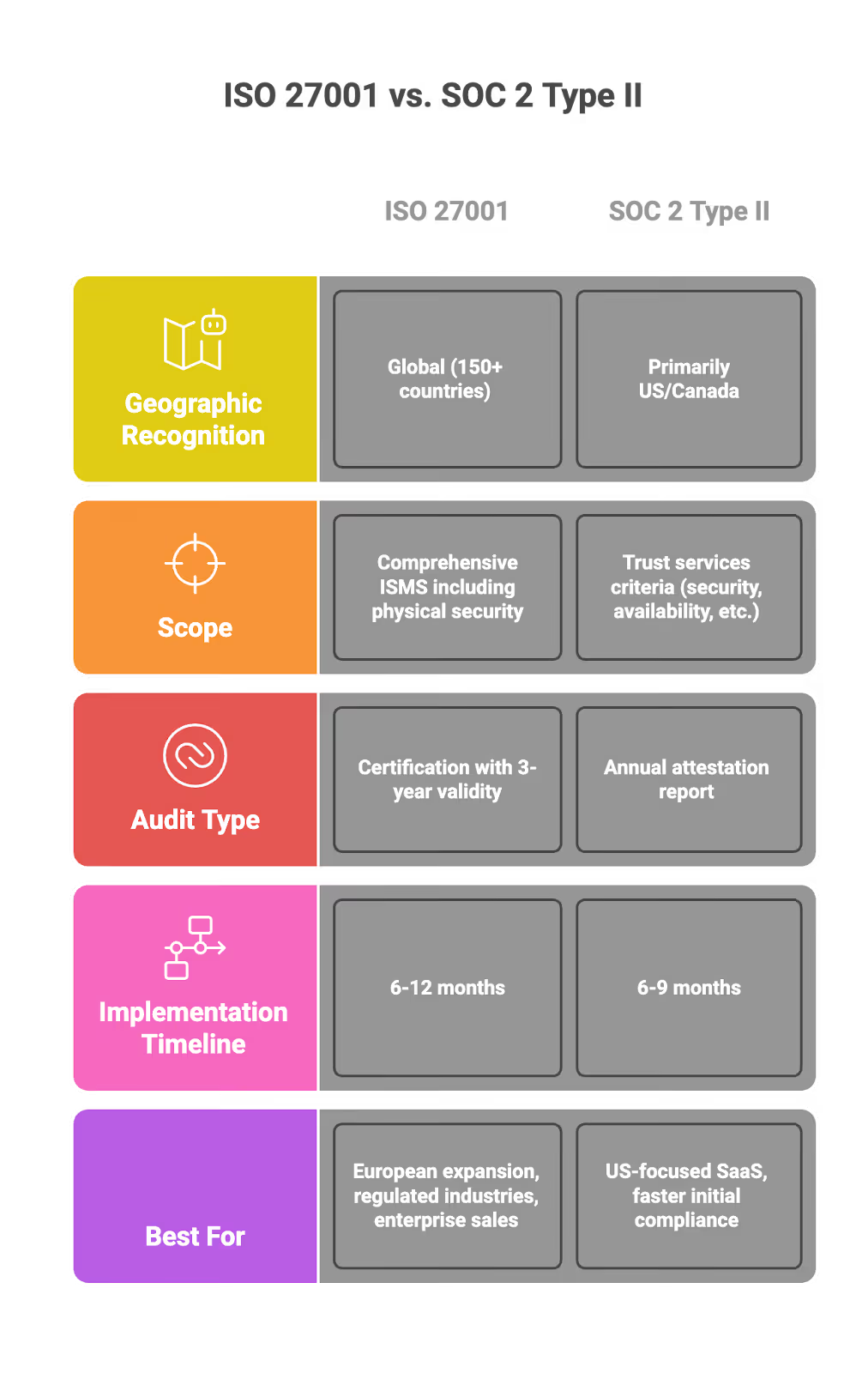
For startups targeting European enterprise customers or regulated industries like healthcare and finance, ISO 27001 provides broader coverage and stronger competitive advantage. The risk management process embedded in ISO 27001 also creates a foundation that makes subsequent compliance requirements (GDPR, HIPAA, SOC 2) significantly easier to achieve.
Understanding these framework differences matters less than understanding what your target customers actually require. Review your stalled deals and lost opportunities—the patterns will guide your certification strategy.
ISO 27001 Certification Requirements for Startups
Moving from conceptual understanding to practical requirements, ISO 27001 certification demands evidence across three categories: documentation, technical controls, and organizational processes. The international standard specifies approximately 150 requirements through clauses 4-10, plus 93 security controls in Annex A that you’ll selectively implement based on your risk assessment.
Core ISMS Documentation Requirements
Your information security management system requires foundational documentation that auditors will examine during the certification audit:
Information Security Policy: A board-approved document establishing your commitment to information security and defining high-level security practices. For startups, this typically covers secure configuration standards, incident management protocols, cryptography requirements, and backup procedures. Your policy should be concise—10-15 pages maximum—and reviewed annually as your business processes evolve.
Risk Assessment Methodology: Document how your organization will evaluate risks, including criteria for likelihood and impact scoring. Startups commonly use qualitative approaches (5x5 matrices) rather than complex quantitative methods. The key is consistency and repeatability—you’ll conduct these assessments regularly.
Statement of Applicability (SoA): This critical document lists all 93 Annex A controls and justifies which ones apply to your startup and which don’t. For a 20-person SaaS company, you might implement 50-60 controls while documenting why physical security controls for manufacturing don’t apply. The SoA becomes your security blueprint and the primary document auditors reference.
Risk Treatment Plan: After assessing information security risks, document your decisions for each risk: accept, mitigate, transfer, or avoid. Include specific mitigation strategies, responsible parties, and implementation timelines.
Technical Controls Implementation
ISO 27001’s Annex A provides 93 information security controls organized across four themes. For SaaS startups, prioritize these technical implementations:
Access Management: Implement identity and access management (IAM) with multifactor authentication across all systems. For remote startup teams, this means enforcing MFA on AWS/GCP consoles, GitHub repositories, customer databases, and internal tools like Slack. Zero-trust principles should guide access decisions.
Data Protection : Encrypt sensitive information at rest and in transit. For SaaS applications, this includes encrypted database storage (e.g., AES-256 for RDS), TLS 1.3 for API communications, and encrypted backups stored in geographically separate regions. Document your cryptographic standards and key management procedures.
Secure Development : Implement secure coding practices in your CI/CD pipeline. This includes dependency scanning, static code analysis, and container security for Kubernetes environments. The 2022 ISO IEC 27001 update specifically addresses these modern development practices.
Incident Response : Create procedures for detecting, reporting, and responding to security incidents. For small teams, define clear escalation paths, communication templates, and recovery procedures that don’t assume 24/7 security operations.
Organizational Controls for Startups
Beyond technical implementations, ISO 27001 requires organizational processes that address your people and partnerships:
Security Awareness Training: All employees need documented training on information security policies and their responsibilities. For distributed startup teams, quarterly security quizzes with 85%+ pass rates provide auditable competence evidence. Track completion rates and address weaknesses through targeted training courses.
Vendor Management : Document how you assess and monitor third-party SaaS tools handling your data. This includes security questionnaires for critical vendors, contract clauses requiring breach notification, and periodic reviews of vendor security posture. Given that 44% of SaaS breaches originate from third-party risks, auditors scrutinize this area closely.
Business Continuity : Define how your startup maintains operations during disruptions. For early-stage companies, focus on critical system recovery: database restoration procedures, infrastructure-as-code for rapid redeployment, and communication plans for customer notification.
These organizational controls prepare your startup for sustainable growth—the processes you build now scale with your team.
The ISO 27001 Certification Process: Step-by-Step Implementation
With requirements understood, implementation follows a structured path. Most startups complete certification in 6-12 months, with timeline variations depending on existing security maturity and available resources.
Phase 1: Preparation and Gap Analysis (Months 1-3)
This phase establishes your ISMS foundation and identifies gaps between current practices and certification requirements.
- Define ISMS scope based on customer requirements and business priorities. Your scope determines what’s included in certification. For SaaS startups, typically include your production environment, customer databases, development infrastructure, and supporting business processes. Explicitly exclude non-essential systems like marketing websites to avoid unnecessary complexity. Document scope boundaries clearly—this becomes the foundation auditors evaluate.
- Conduct comprehensive risk assessment using startup-appropriate methodologies. Identify assets (systems, data, people, processes), potential threats, and vulnerabilities. Score each risk using your documented methodology. For a typical SaaS startup, expect to evaluate 100-150 assets and identify 50-100 risks requiring treatment. Compliance automation tools like Vanta or Drata can reduce this effort by 40-50% through pre-built risk libraries.
- Implement priority controls addressing highest-risk areas first. Don’t attempt all 93 controls simultaneously. Focus initial effort on high-impact risks: authentication weaknesses, unencrypted data stores, missing access controls. Assign each control to specific team members with clear deadlines.
- Document policies and procedures using templates designed for small teams. Avoid over-engineering documentation. Policies should reflect your actual practices, not aspirational security theater. Auditors verify implementation, not policy comprehensiveness—a 5-page access control procedure that’s actually followed beats a 50-page document that’s ignored.
Phase 2: Audit Process (Months 4-6)
The certification audit happens in two stages, conducted by an accredited certification body with auditors experienced in your industry.
- Select accredited certification body with startup experience. Choose a certification body accredited by a recognized accreditation body (UKAS, ANAB, etc.). Request auditors familiar with SaaS companies and cloud infrastructure—they’ll understand your environment and ask relevant questions. Costs vary significantly; obtain 3-4 quotes.
- Complete Stage 1 audit (documentation review). The external auditor reviews your ISMS documentation: scope, policies, risk assessment, SoA, and supporting procedures. This typically takes 1-2 days. Expect findings—most organizations receive 3-5 observations or minor nonconformities requiring correction before Stage 2.
- Address Stage 1 findings and prepare for Stage 2. Resolve all Stage 1 nonconformities with documented evidence. Conduct internal audit of high-risk areas to proactively identify remaining gaps. Ensure all employees understand their ISMS responsibilities before Stage 2 interviews.
- Undergo Stage 2 audit (implementation verification). The certification audit verifies your ISMS operates as documented. Auditors interview staff, review evidence collection (logs, records, training certificates), and test control effectiveness over 3-5 days. Successful completion issues a 3-year certificate with annual surveillance audit requirements.
Cost Comparison by Startup Stage
Certification costs vary significantly based on organizational complexity and existing security maturity:

Costs include certification body fees ($5,000-$15,000), consulting support ($8,000-$20,000), compliance automation tools ($8,000-$20,000 annually), and internal labor. The surveillance audit costs approximately $4,000-$12,000 annually to maintain certification.
For seed-stage startups, partnering with experienced consultants who understand small business constraints provides the most efficient path. The investment typically pays back within 6 months through accelerated enterprise deal closure.
Common Challenges and Solutions
Even well-prepared startups encounter obstacles during ISMS implementation. Understanding common challenges helps you navigate them efficiently.
Limited Internal Security Expertise
Most startup CTOs lack dedicated security backgrounds, yet ISO 27001 requires specialized knowledge across risk management, compliance requirements, and security techniques. Partner with specialized consultants who understand startup constraints and can provide fractional CISO services during certification. Look for consultants who’ve successfully guided similar-stage companies through certification—they’ll know where to focus effort and where shortcuts are acceptable.
Resource Constraints and Competing Priorities
Certification competes with product development, customer support, and sales activities for limited team bandwidth. Use compliance automation tools to reduce manual effort by 40-50% and focus internal team on high-value activities. Platforms like Drata, Vanta, or Secureframe automatically collect evidence, monitor control effectiveness, and generate audit-ready documentation—transforming what traditionally required 500+ hours into 50 hours of focused work.
Scope Creep and Over-Engineering
Enthusiasm to “do security right” often leads startups to over-scope their ISMS, including systems that don’t affect customer data or implementing controls that exceed regulatory compliance requirements. Start with minimum viable ISMS scope focused on customer requirements, avoid gold-plating controls that don’t add business value. You can expand scope in future certification cycles as your organization’s processes mature.
Maintaining Certification During Rapid Growth
Startups that double headcount annually face unique challenges maintaining certified management systems. Build scalable processes from day one and establish quarterly compliance reviews to adapt controls as team and infrastructure evolve. Document role-based responsibilities rather than individual assignments, and integrate security checkpoints into your hiring and onboarding workflows.
The 40% first-audit failure rate reported by industry analysts typically stems from incomplete Statement of Applicability documentation and insufficient implementation evidence. Thorough internal audit preparation addresses both issues.
Conclusion and Next Steps
ISO 27001 certification transforms information security from a sales obstacle into a competitive advantage. For startups targeting enterprise customers, certification routinely enables access to contract opportunities worth 10x the initial investment. Beyond revenue, certified organizations report 30% fewer security incidents and 15-20% reductions in cyber insurance premiums.
Immediate next steps:
- Assess current security posture by mapping existing controls against ISO 27001 Annex A requirements—identify your largest gaps
- Define certification timeline aligned with sales goals; if enterprise deals require certification, work backward from target close dates
- Budget for certification costs including consulting, tools, and certification body fees; present ROI analysis to your board
- Evaluate compliance automation platforms that can reduce implementation effort; most offer startup-friendly pricing
Related topics worth exploring: SOC 2 Type II for US-focused customer requirements, penetration testing requirements that complement ISO 27001 controls, and ongoing compliance maintenance processes for rapidly growing organizations.
How SecureLeap Helps Startups Win Their ISO 27001 Certification
At SecureLeap, we partner with seed-to-Series B SaaS and tech companies to make ISO 27001 certification achievable without building a massive security team.
What We Offer
- ISO 27001 Readiness Assessments: Gap analysis against the standard, tailored to your risk profile and timeline
- Policy and Control Design: Startup-friendly documentation that passes auditor scrutiny without enterprise bloat
- vCISO Leadership: Fractional security leadership to guide strategy and own your audit program
- Internal Audits: Independent assessments that prepare you for the real thing
- Certification Body Coordination: We help you select and work with accredited bodies efficiently
- Penetration Testing: Comprehensive pentest services to identify vulnerabilities and strengthen your security posture
- Bundled Packages: Cybersecurity consulting + audit readiness + penetration testing in one engagement
- Tool Implementation: Drata, Vanta, and Secureframe setup mapped correctly to ISO/IEC 27001:2022
Ready to Start Your Certification Journey?
Schedule a free ISO 27001 audit readiness call to review your timeline, budget, and best path to certification.
Frequently Asked Questions (FAQ) for ISO 27001 Certification
What is ISO 27001 certification?
ISO 27001 certification is an internationally recognized standard that verifies an organization’s information security management system (ISMS) meets rigorous requirements to protect sensitive data and manage information security risks effectively.
How long does it take to get ISO 27001 certified?
The certification process typically takes between 6 to 12 months, depending on your organization’s size, existing security maturity, and complexity of your ISMS.
Is ISO 27001 certification mandatory?
No, ISO 27001 certification is not legally required, but it is often a prerequisite for doing business with large companies, regulated industries, and international clients.
What are the benefits of ISO 27001 certification for startups?
Certification helps build customer trust, gain a competitive advantage, speed up sales cycles, meet regulatory requirements, and demonstrate a proactive approach to information security.
How much does ISO 27001 certification cost?
Costs vary widely based on company size and scope but generally range from $40,000 to $80,000 for startups, including audit fees, consulting, and internal resource allocation.
How can automation tools help with ISO 27001 compliance?
Compliance platforms can reduce manual implementation effort by 40 percent to 50 percent. These tools automatically collect evidence and monitor control effectiveness to simplify the audit process.
If you’re ready to take the next step toward ISO 27001 certification or have questions about how to get started, contact SecureLeap today. Our experienced team is here to help your startup build a robust information security management system and achieve certification efficiently. Reach out to learn more about our services and how we can support your journey to enhanced security and business growth.
%20(35)%20(1).avif)

%20(22)%20(1).avif)
%20(19).avif)